
Balance Sheet vs Profit and Loss for Contractors: What Your P&L Doesn’t Show
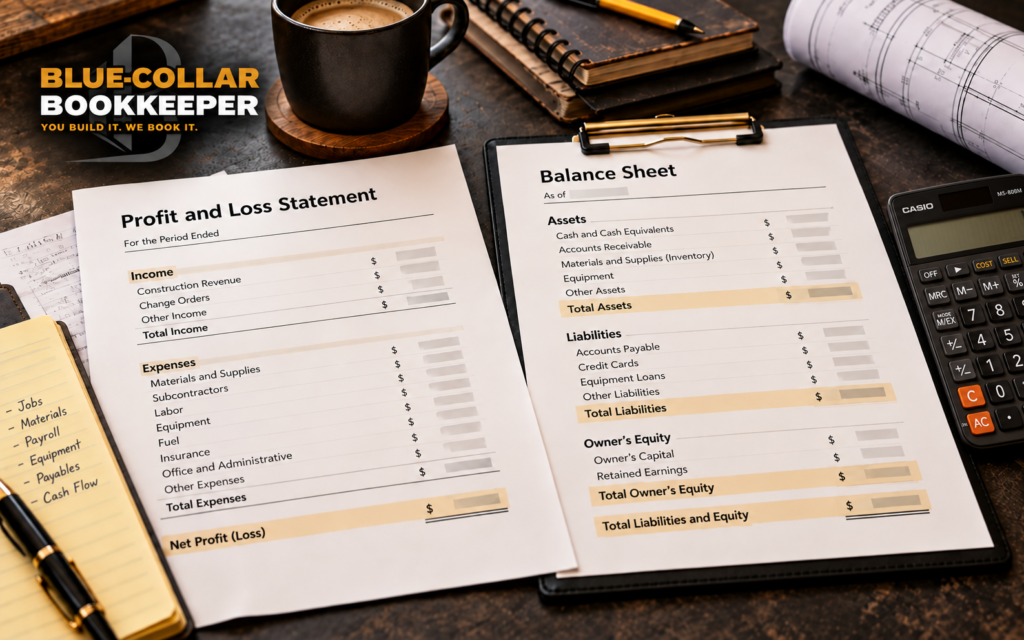
Your P&L can show a profit while the rest of the business tells a more complicated story. Learn how contractors can use the balance sheet and profit and loss statement together to understand profitability, debt, cash, assets, and financial position.
The Monthly Bookkeeping Review: 8 Numbers Every Business Owner Should Check
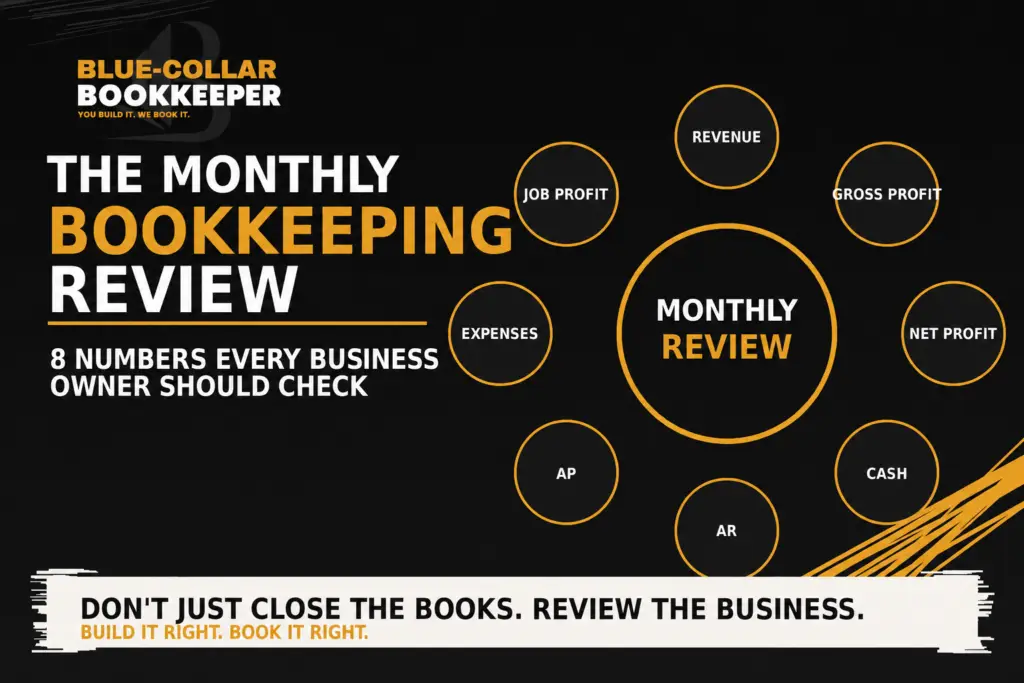
Your bookkeeping shouldn’t stop when the month closes. Learn eight numbers business owners should review each month to better understand revenue, profit, cash, receivables, expenses, and business performance.
Job Profitability Reports: What Contractors Should Review After Every Project
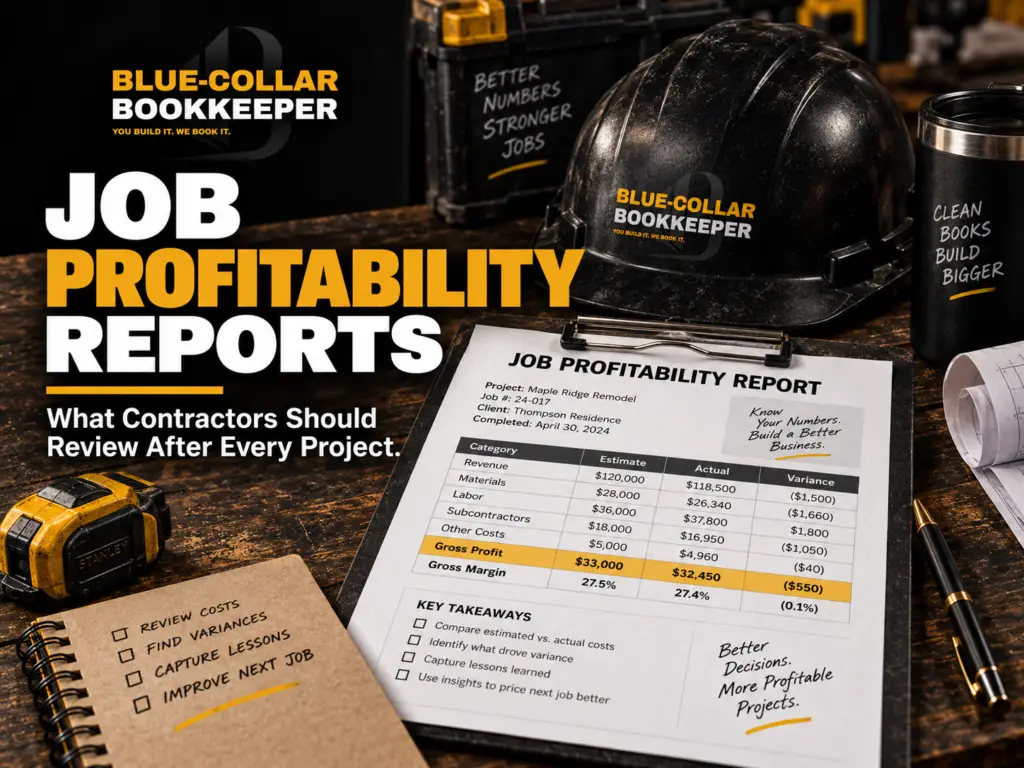
A finished project can still hold important lessons. Learn what contractors should review in a job profitability report, including final revenue, actual job costs, gross profit, margin, change orders, and estimated versus actual performance.
Profit and Loss for Contractors: What Your P&L Is Not Telling You

Your P&L can show profit and still leave you wondering where the money went. This guide explains what a profit and loss report does and doesn’t show contractors, including revenue, gross profit, net profit, job costs, cash flow, owner draws, debt payments, taxes, and messy QuickBooks records.
How Contractors Track Materials, Labor, and Subcontractors Without Guessing

Contractors can’t track job profit from memory. This guide breaks down how to track materials, labor, subcontractors, equipment, change orders, and customer payments so each project shows what it actually cost, what it brought in, and whether it made money.
Cash Flow for Contractors: Why Profitable Jobs Still Leave You Short on Cash

A contractor can finish profitable jobs and still feel short on cash. This guide explains why profit and cash flow aren’t the same thing, how unpaid invoices, upfront material costs, subcontractor payments, taxes, debt, and owner draws can squeeze the bank account, and why clean monthly books help contractors see where the money’s really going.
Monthly Bookkeeping vs Cleanup Bookkeeping: Which Does Your Contracting Business Need?

Some contractors need monthly bookkeeping to stay current. Others need cleanup bookkeeping first because the books are already behind, messy, or hard to trust. This guide breaks down the difference between monthly bookkeeping and cleanup bookkeeping so you can understand which one your contracting business may need next.
Tax-Ready Books for Contractors: What to Clean Up Before Tax Time
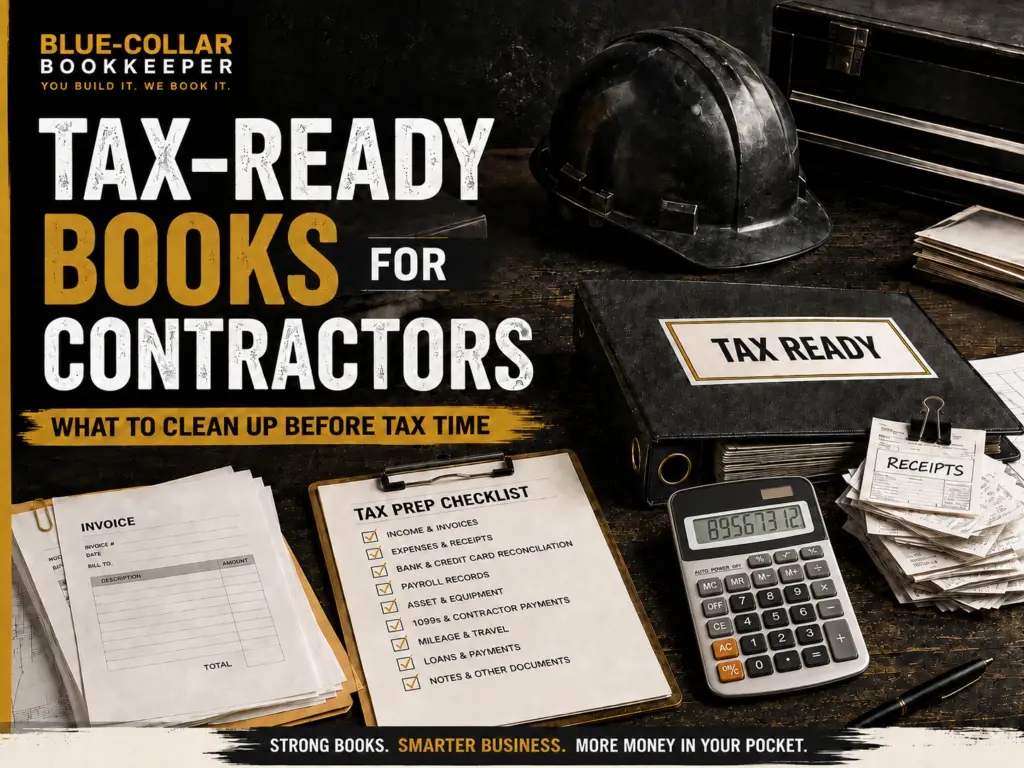
Tax time shouldn’t start with a pile of receipts, messy QuickBooks reports, and unanswered questions. This guide breaks down what contractors should clean up before tax season, including income, expenses, subcontractor payments, receipts, reconciliations, job costs, and the reports your tax professional may need.
QuickBooks Cleanup for Contractors: 9 Signs Your File Needs Help
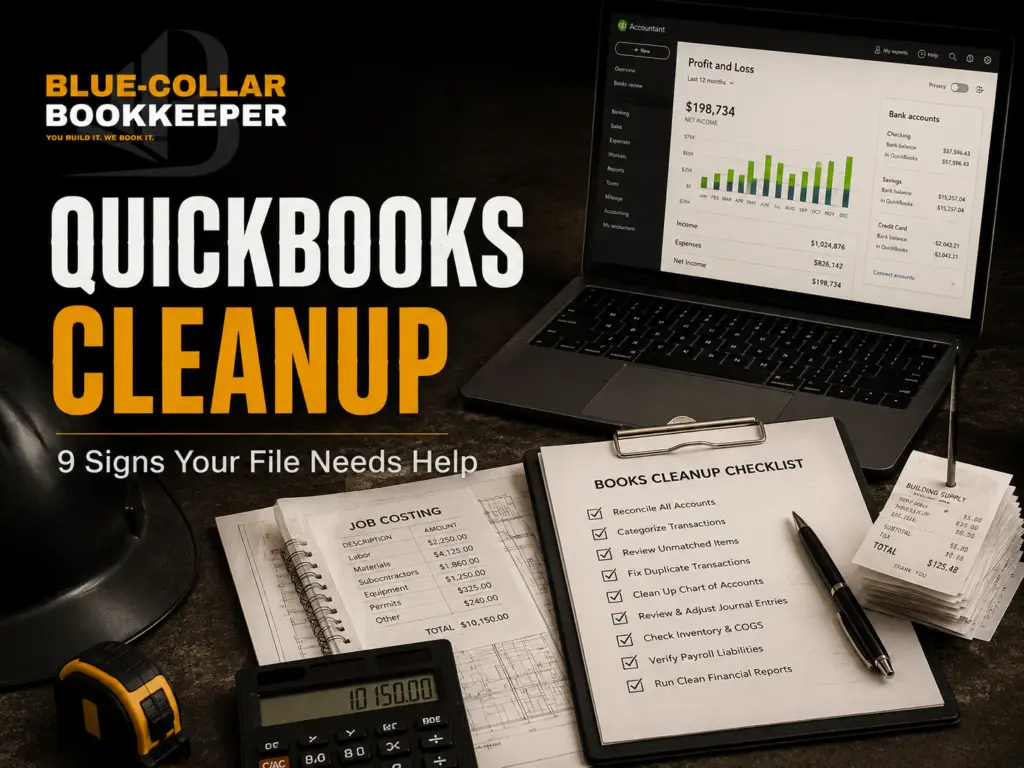
Your QuickBooks file may be open, but that does not mean it’s telling the truth. This guide breaks down the signs contractors may need QuickBooks cleanup, from uncategorized transactions and duplicate entries to reports that do not match the bank, unclear job costs, and tax-time problems.
Job Costing for Contractors: Why Some Jobs Make Money and Others Don’t
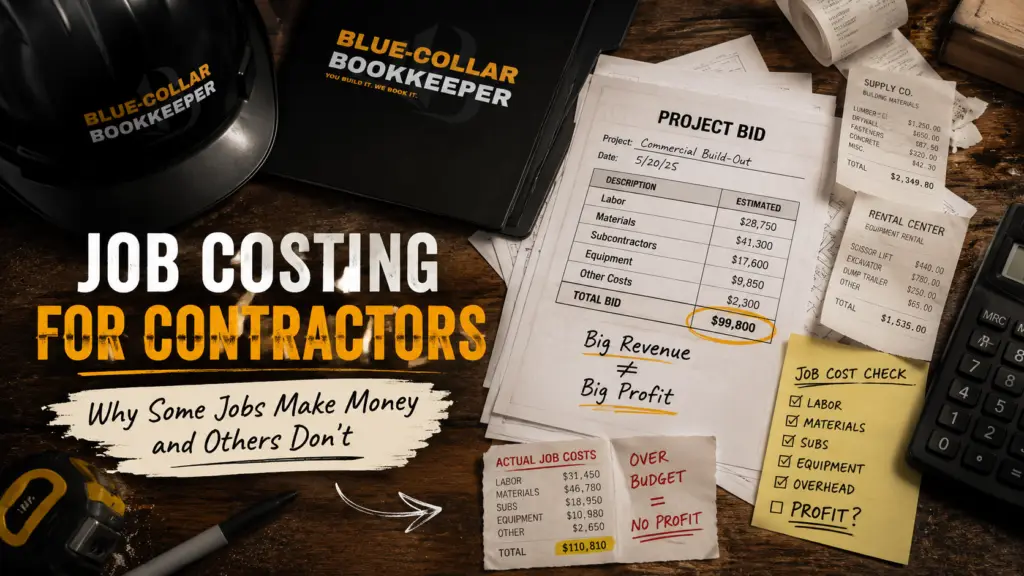
Big jobs don’t always mean big profit. This guide breaks down how job costing helps contractors track materials, labor, subcontractors, equipment, change orders, and customer payments so they can see which jobs are actually making money and which ones are quietly eating into the bottom line.