
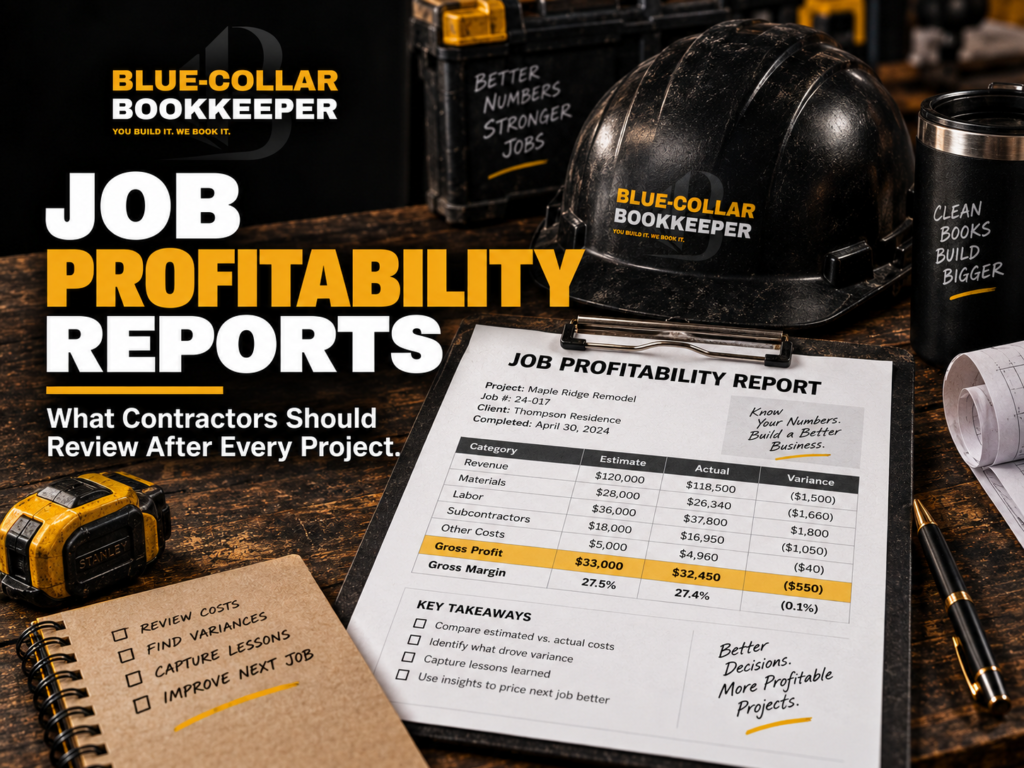
The project is finished. The customer has been invoiced. The crew has moved on.
But do you actually know what the job made?
A lot of contractors can tell you what they charged for a project. They may even know roughly what materials and subcontractors cost.
That isn’t the same as knowing how the project performed.
A useful job profitability report should help you compare what you expected to happen with what actually happened. It should show where the margin changed, which costs ran high, whether change orders covered the additional work, and what deserves attention before you price the next similar project.
That’s the real value of job costing for contractors. It isn’t just recording expenses. It’s understanding what happened behind the work.
The Job Isn’t Financially Finished When the Work Is Done
Finishing the physical work is one milestone.
Finishing the financial review is another.
A contractor may know that the customer paid $45,000 for a project, but that number alone doesn’t tell you whether the job performed well.
You still need to know:
What did the materials actually cost?
How much labor went into the job?
What did subcontractors ultimately bill?
Were there equipment rentals, permits, dump fees, or deliveries that weren’t included in the original estimate?
Did the customer approve change orders?
Did those change orders cover the added work?
Are there still bills that haven’t made it into the books?
A job profitability analysis pulls those pieces together.
The goal isn’t to create another report that gets filed away. The goal is to understand the project before its lessons disappear into the next one.
Start With Final Project Revenue
The first number to verify is the final revenue connected to the job.
That may sound obvious, but projects don’t always end exactly where the original contract started.
Maybe there were approved change orders.
Maybe part of the scope was removed.
Maybe additional work was billed later.
Maybe the customer still owes a final balance.
You need to know what the project was ultimately billed for before you can evaluate its profitability.
That also means distinguishing revenue from cash.
If you invoiced $48,000 but the customer has only paid $40,000, the job’s profitability and the business’s current cash position are two different questions.
Clean accounts receivable and payable support can help make those outstanding amounts easier to see.
Compare Estimated Costs With Actual Costs
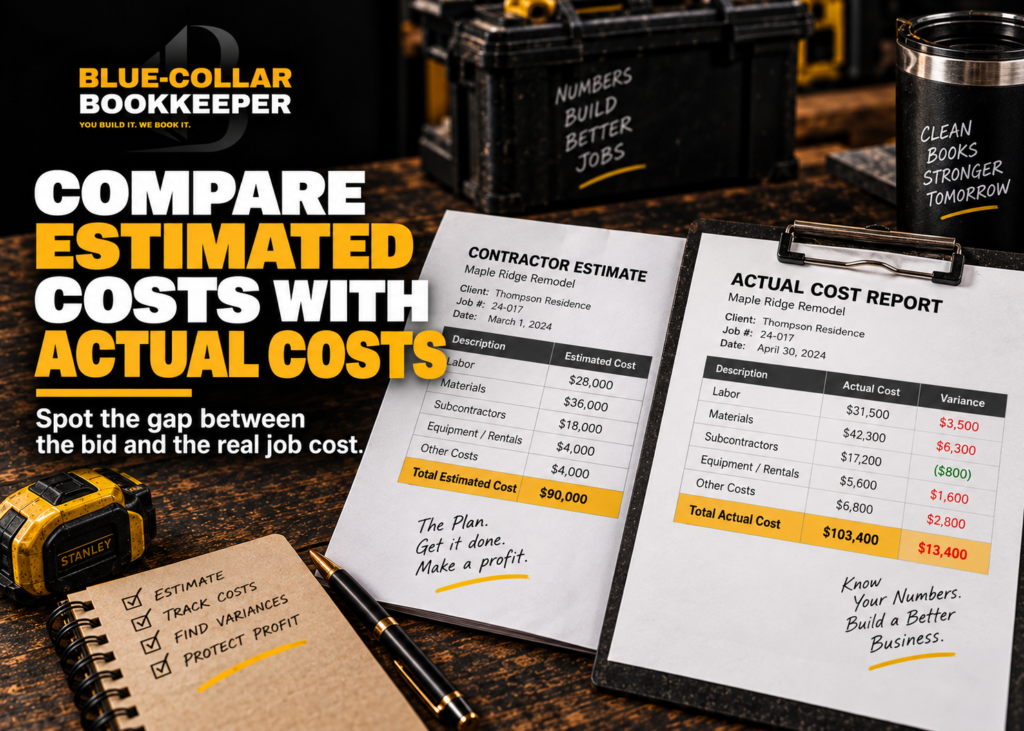
This is where job profitability reports become genuinely useful.
The final profit number matters, but the differences between your estimate and the actual project costs often tell you more.
A job might still make money while performing worse than expected.
The question becomes:
Where did the difference come from?
Materials
Start with materials.
Compare what you expected to spend with what actually went into the project.
That includes the main supplier order, additional material runs, delivery charges, waste, replacement items, and other job-specific purchases.
One or two small overages may not seem important while the project is underway. Across several categories, they can meaningfully change the final margin.
Labor
Next, compare estimated labor with actual labor.
If the bid assumed 120 hours and the project required 165, you need to know that before pricing another similar job.
The goal isn’t automatically to blame the crew.
Maybe the estimate was too aggressive.
Maybe the site created unexpected problems.
Maybe the customer changed the scope.
Maybe part of the work consistently takes longer than expected.
The report tells you that something deserves investigation.
Subcontractors
Review every subcontractor tied to the project.
Make sure the final invoices are included.
Late subcontractor bills are especially important because a project can appear more profitable than it really is when the books are reviewed before all the costs arrive.
Equipment and Other Direct Costs
Don’t forget the smaller costs that can disappear into the background.
Equipment rental, permits, dumpsters, disposal fees, delivery charges, specialized tools, travel, and other project-specific expenses can all affect the final result.
This is why contractors need a consistent process to track materials, labor, and subcontractors while the project is happening.
If those costs aren’t connected to the right project, the final profitability report won’t have much to work with.
Review Change Orders Separately
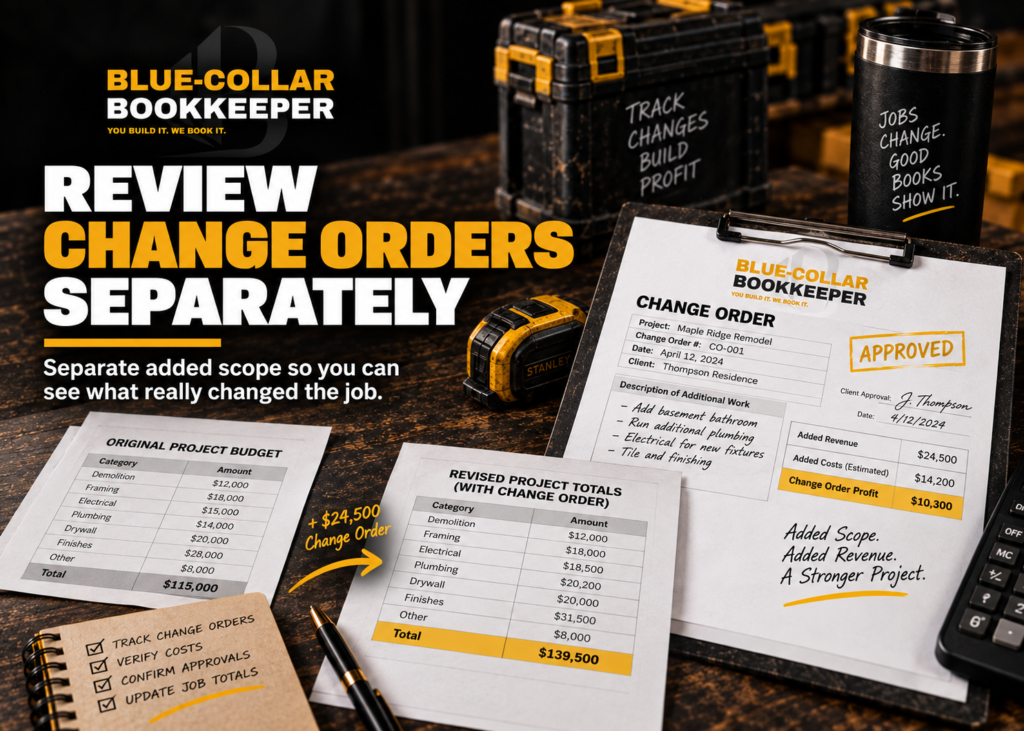
Change orders deserve their own review.
A customer asks for additional work. The project gets adjusted. Materials increase. Labor increases. Maybe a subcontractor comes back.
The contractor bills more.
That doesn’t automatically mean the change order protected the margin.
Ask:
What additional work was performed?
What additional revenue was billed?
What did the added work actually cost?
Was the change approved and collected?
Did the pricing cover the extra materials, labor, and subcontractor costs?
This matters because a project can finish above the original contract amount and still underperform if the additional work wasn’t priced correctly.
Calculate Gross Profit and Profit Margin
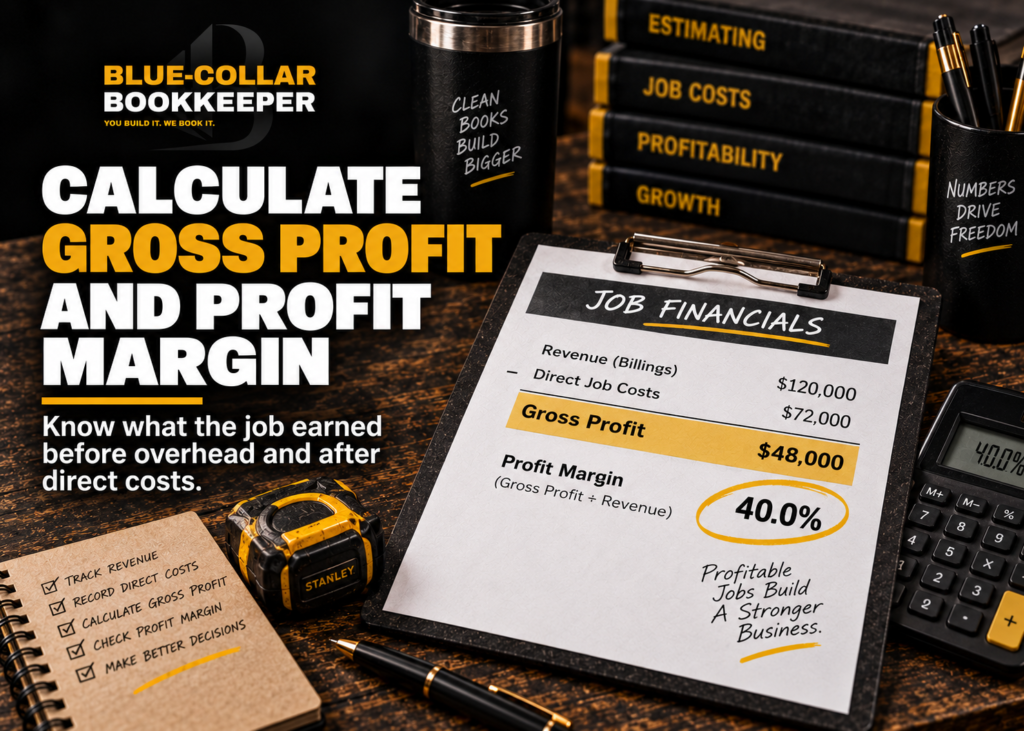
Once final revenue and direct project costs are reasonably complete, you can look at gross profit.
In simple terms:
Project revenue minus direct job costs equals gross profit.
Suppose a project produces $50,000 in revenue and has $36,000 in direct job costs.
The gross profit is $14,000.
You can also look at gross profit margin.
That expresses the gross profit as a percentage of the project’s revenue.
The important point isn’t that every contractor should hit one universal percentage. Businesses price work differently, have different cost structures, and handle overhead differently.
The useful question is whether the job performed the way your business expected it to perform.
That’s where profit and loss for contractors and project-level reporting start working together.
A P&L can tell you how the business performed overall.
A job profitability report helps you see what happened inside a specific project.
Look for Costs That Haven’t Hit the Books Yet
A profitability report is only as complete as the information behind it.
Before deciding that the project is financially closed, ask whether any costs are still missing.
Has every subcontractor sent the final invoice?
Are there supplier charges that haven’t cleared yet?
Were company credit cards reviewed?
Did someone buy project materials that haven’t been recorded?
Are there rental or disposal charges still coming?
This matters because a project showing $12,000 of gross profit today may not still show $12,000 after the final expenses arrive.
Current monthly bookkeeping makes this review much easier.
When the books are months behind, the project may already be forgotten by the time the numbers become complete.
Don’t Confuse Profit With Cash Collected
This distinction is worth repeating.
A profitable project can still create cash pressure.
Maybe the customer owes the final payment.
Maybe materials were purchased weeks before the customer paid.
Maybe subcontractors were paid before the next progress invoice was collected.
Maybe retainage or another balance remains outstanding.
The job can be profitable on paper while cash is still tied up.
That’s why contractor cash flow needs to be reviewed alongside profitability.
Profit answers one question.
Cash answers another.
You need both to understand what’s actually happening.

A Project Can Make Money and Still Miss the Estimate
Consider a simple example.
This is illustrative, not a Blue-Collar Bookkeeper client result.
A contractor estimates a project like this:
Revenue: $45,000
Materials: $13,000
Labor: $10,000
Subcontractors: $7,000
Other direct costs: $2,000
Expected direct costs: $32,000
Expected gross profit: $13,000
The job looks solid when it’s estimated.
Then the project happens.
Materials come in at $14,200.
Labor reaches $11,400.
Subcontractor costs finish at $7,300.
Other direct costs total $2,100.
Actual direct costs: $35,000
Actual gross profit: $10,000
The job still made money.
But it produced $3,000 less gross profit than expected.
That’s where the report becomes valuable.
The contractor can now ask why.
Did material pricing change?
Was there more waste than expected?
Did labor take longer?
Was the estimate too tight?
Was additional work performed without a sufficient change order?
Without that review, the contractor may bid the next similar project using the same assumptions.
The project wasn’t a failure.
But it contained information worth learning from.

What Should Change Before You Bid the Next Similar Job?
The real value of job profitability tracking appears when you use the completed project to improve the next estimate.
After reviewing the numbers, ask:
Did our material estimate hold up?
Did labor take about as long as expected?
Were subcontractor quotes accurate?
Were equipment and miscellaneous project costs included properly?
Did change orders protect the margin?
Did we price this type of job appropriately?
Did something happen once, or does it happen on this type of project repeatedly?
Would we take this job again at the same price?
These are performance metrics for job costing that actually matter to an owner.
They turn bookkeeping history into operating information.
Monthly Bookkeeping Makes Job Profitability Reports More Useful
Job profitability reporting works better when the books are current.
If transactions, bills, receipts, and subcontractor invoices are being reviewed regularly, the numbers behind the project are easier to assemble and easier to trust.
That’s one reason monthly bookkeeping for contractors matters beyond tax preparation.
Current books help you review projects while the details are still fresh.
If something looks wrong, you have a better chance of remembering what happened and investigating it.
If the books are several months behind, the owner may be trying to reconstruct a job long after everyone has moved on.
Job Profitability Reports Should Lead to Better Questions
A good report doesn’t run the business for you.
It gives you better questions to ask.
Why did this project beat the estimate?
Why did this one run thin?
Which job types consistently produce better margins?
Which costs keep coming in higher than expected?
Are change orders being priced correctly?
Are certain projects tying up too much cash?
Should similar work be priced differently next time?
That’s what Job Costing & Profitability Reports should help you understand.
The goal isn’t more spreadsheets.
It’s clearer visibility into the work your business is already doing.
Job Profitability Reports FAQs
What is a job profitability report?
A job profitability report compares the revenue and direct costs associated with a particular project so the business owner can understand how the project performed financially.
How do contractors calculate job profitability?
At a basic level, contractors compare final project revenue with the direct costs required to complete the job. Those costs may include materials, labor, subcontractors, equipment, permits, and other job-specific expenses.
What costs should be included in a job profitability report?
The exact setup varies by business, but contractors generally need to capture the direct costs connected to completing the project. That can include materials, labor, subcontractors, rentals, permits, disposal, delivery charges, and other project-specific costs.
What is the difference between job profit and cash flow?
Job profit shows whether the revenue from a project exceeded its costs. Cash flow reflects when money actually enters and leaves the business. A project can be profitable even when some customer payments are still outstanding.
Why should contractors compare estimated and actual job costs?
Comparing estimated and actual costs helps identify where the project performed differently than expected. That information can help the contractor investigate pricing, estimating, labor, materials, subcontractors, and change orders before bidding similar work.
How often should contractors review job profitability?
The most useful time is generally after the financial activity for a project is reasonably complete. Contractors may also benefit from reviewing longer or more complex projects while they’re underway.
Can bookkeeping help contractors track profitability by project?
Yes, when transactions and job costs are recorded consistently and connected to the appropriate project. Bookkeeping provides the underlying information needed to create useful job-level reports.
Ready to See What Your Jobs Are Really Producing?
Finishing the work shouldn’t be the last time you look at the project.
The numbers behind that job can help you understand what worked, what changed, and what deserves attention before the next similar project is priced.
Blue-Collar Bookkeeper helps contractors, trades, and small business owners get clearer numbers behind their work through bookkeeping, job costing, reporting, and profitability support.
Ready to take the next step? Book a free financial consultation below.
We’ll take a look at where your books stand, what may be unclear, and what it would take to get your numbers working for you instead of against you.
Start with a free financial consultation.
You build it. We book it.